

Gothic Blackletter Calligraphy
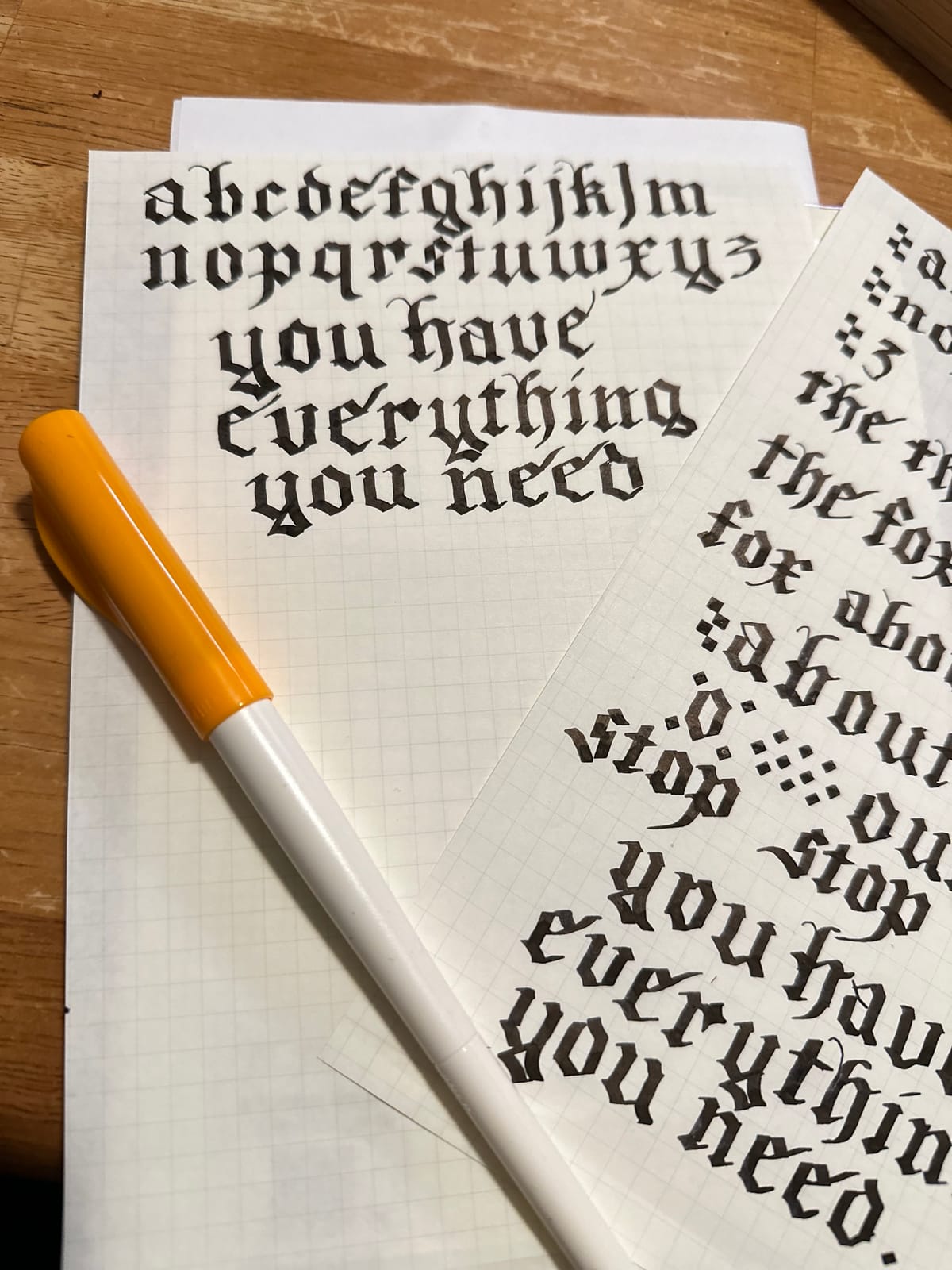
This is a check in of sorts. I set out to start learning gothic blackletter more or less at the beginning of the year. In an attempt to shift away from doing morning pages to a more visual daily practice, I found it’s a little too much to tack daily drawing onto an already chaotic morning routine. Calligraphy would prove useful if I got far enough with it and would hopefully add some structure to my mornings. As for the style, blackletter has a rhythm I prefer to the more popular modernized script styles, it looks freaking cool, and it’s easier to incorporate with the type of imagery I like to make. I write whatever pops into my head, swears, today’s date, song lyrics, or words with letters I’m trying to practice.
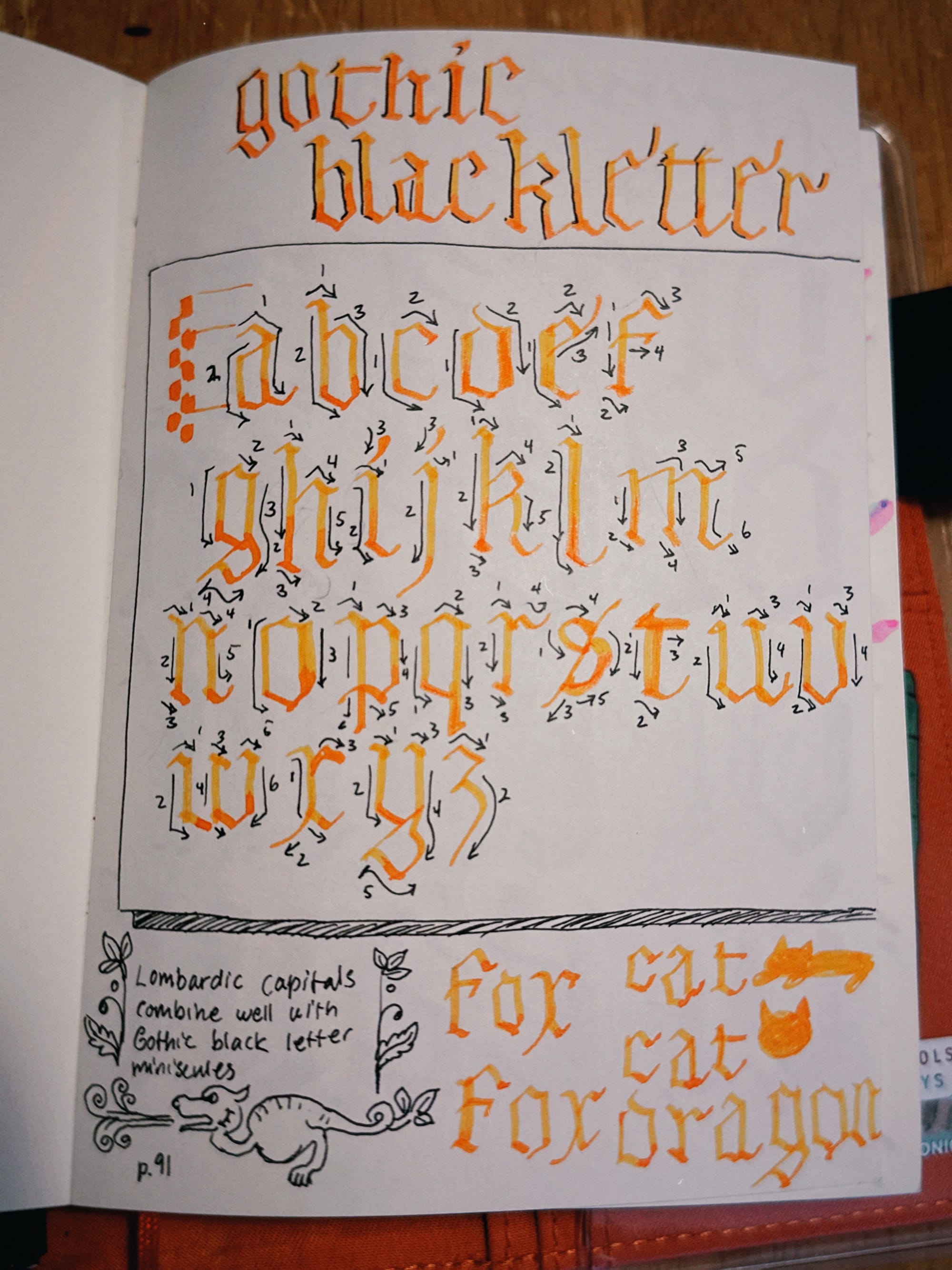
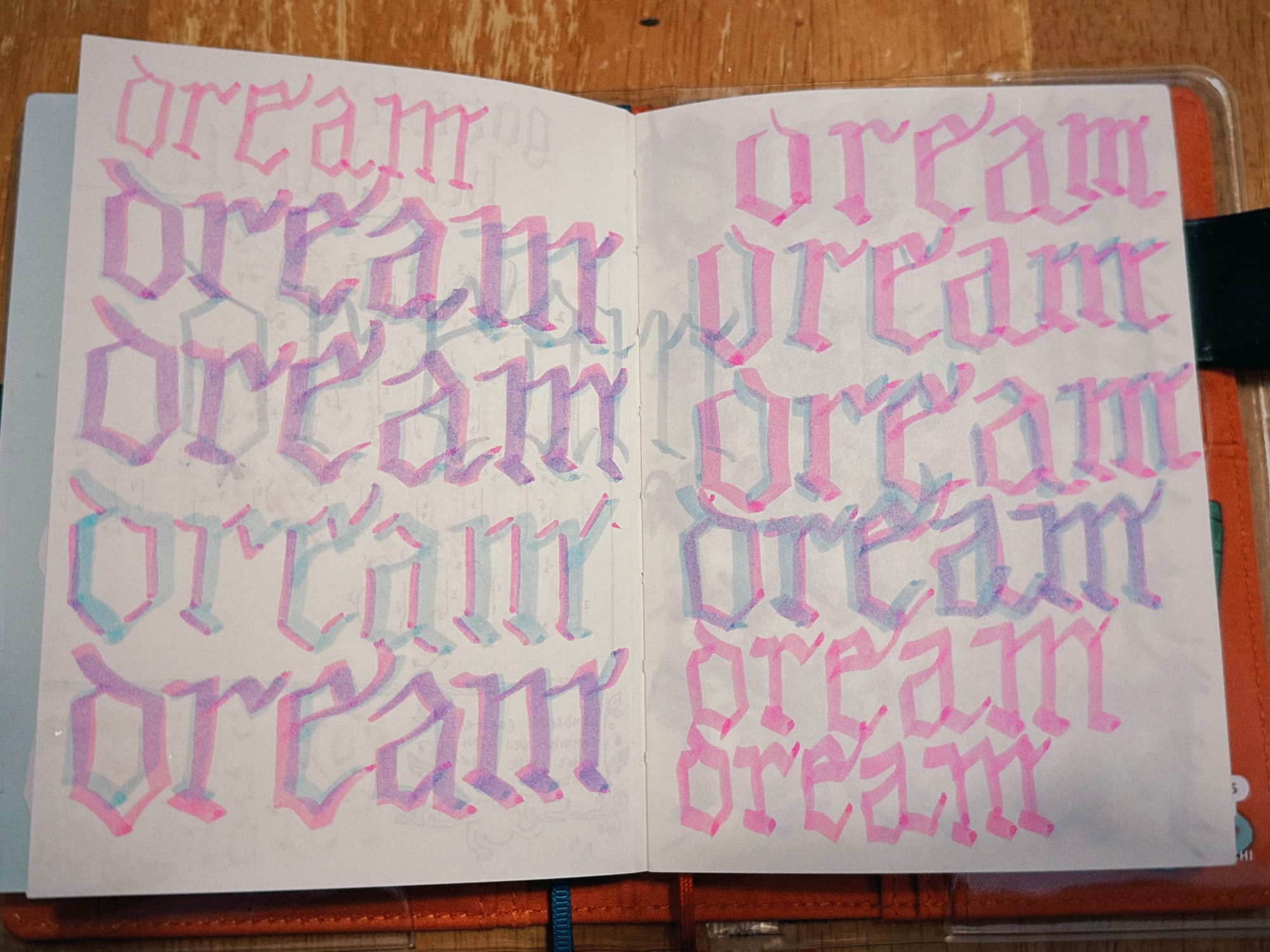
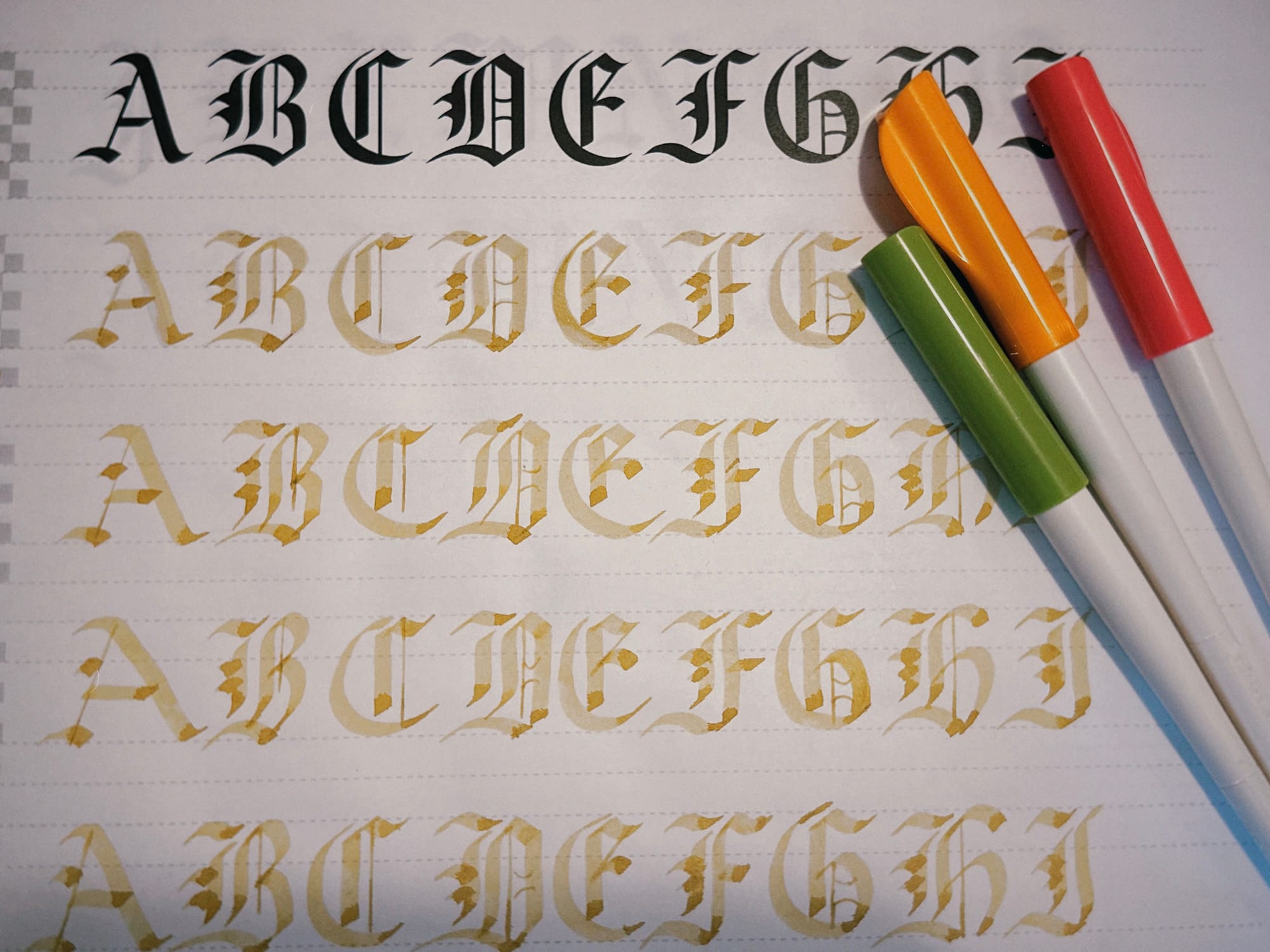
The very first practices pages.
I started off with some fountain pens with stub nibs. I also used the chisel tip of mildliners. These were fun to layer so I could make corrections as I learned all the letters.
Pilot Parallel Pens
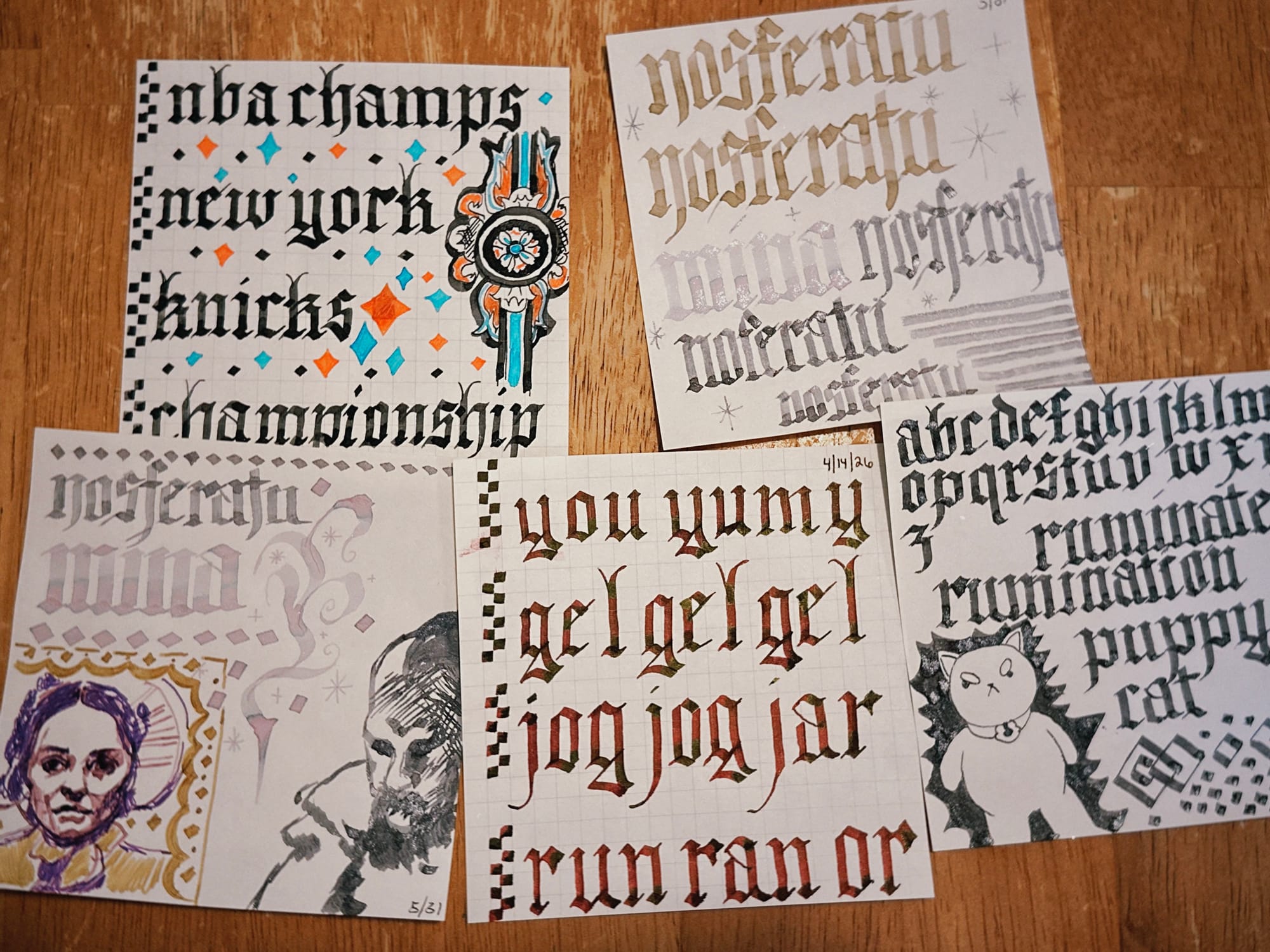
Once I could mostly do the whole lowercase alphabet from memory, I bought a pilot parallel pen. I’m glad I made the purchase despite having an unofficial moratorium on casually adding more fountain pens to my collection. I actually bought two more parallel pens because they made practicing addictive. They’re inked up with some of my most pesky inks, the kind I can’t read using smaller nib widths and super shimmery inks. I like that they use ink quickly. It’s like this little pen/ink/paper ecosystem that keeps me from hoarding too much stationery.
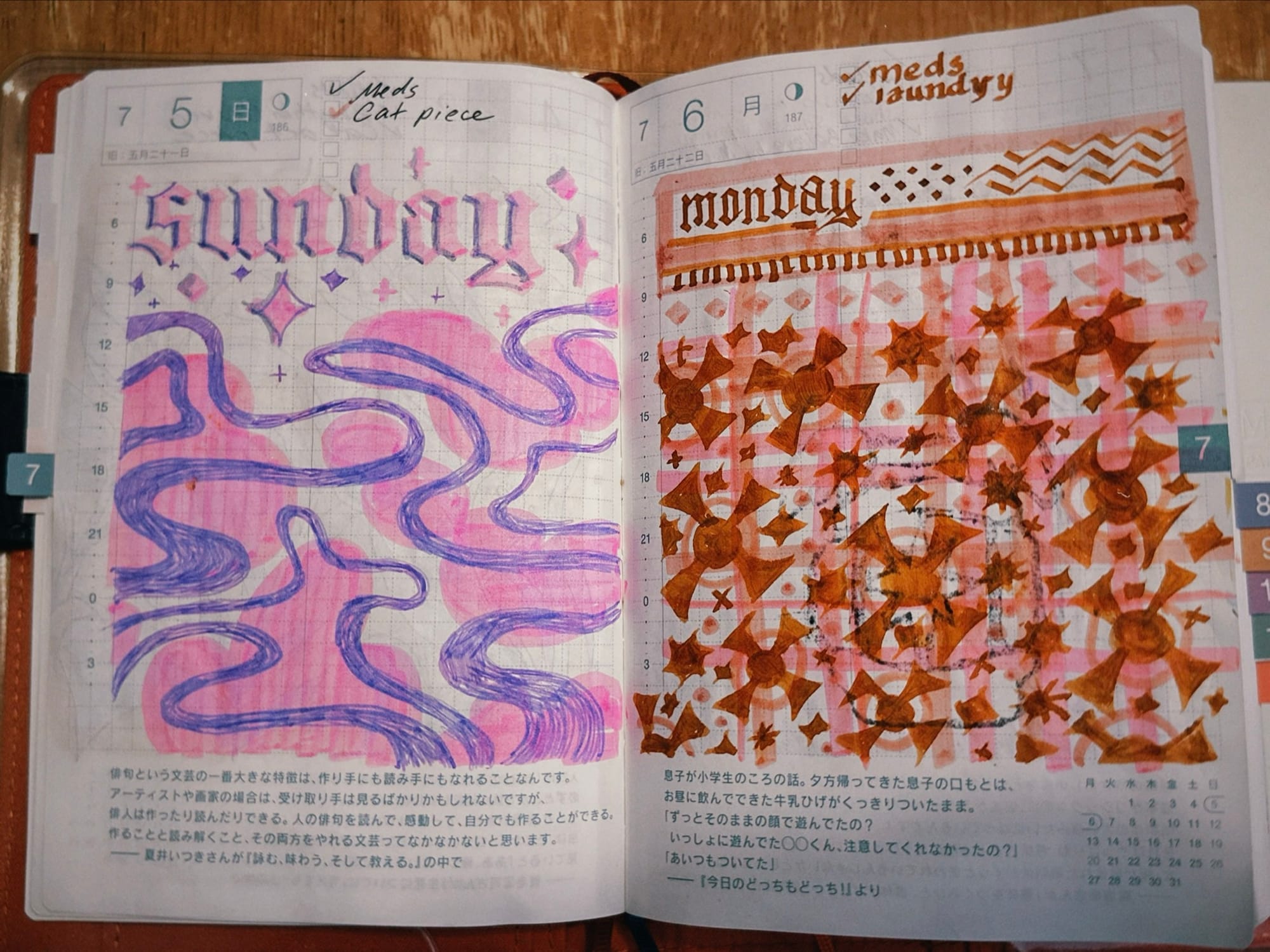
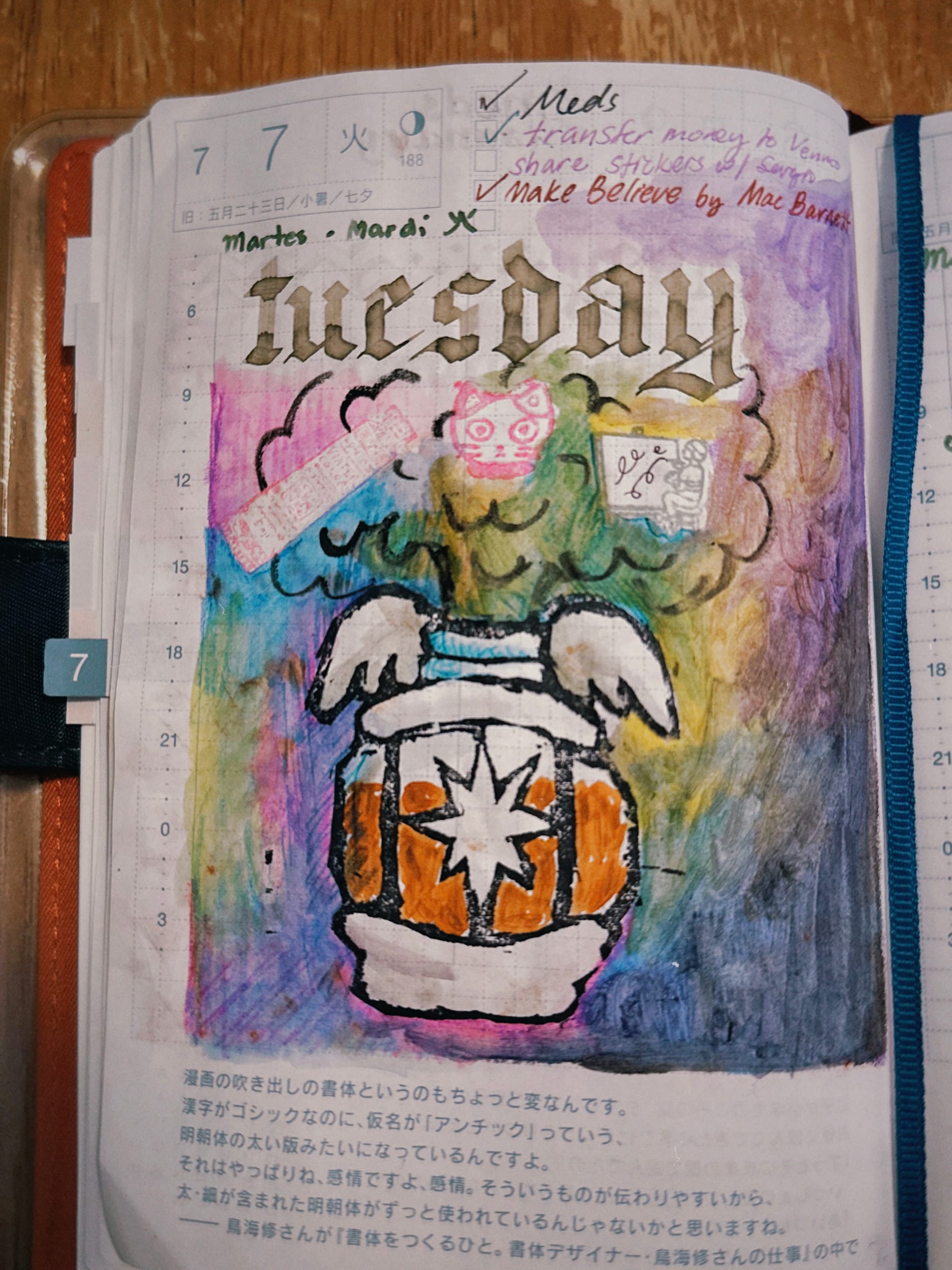
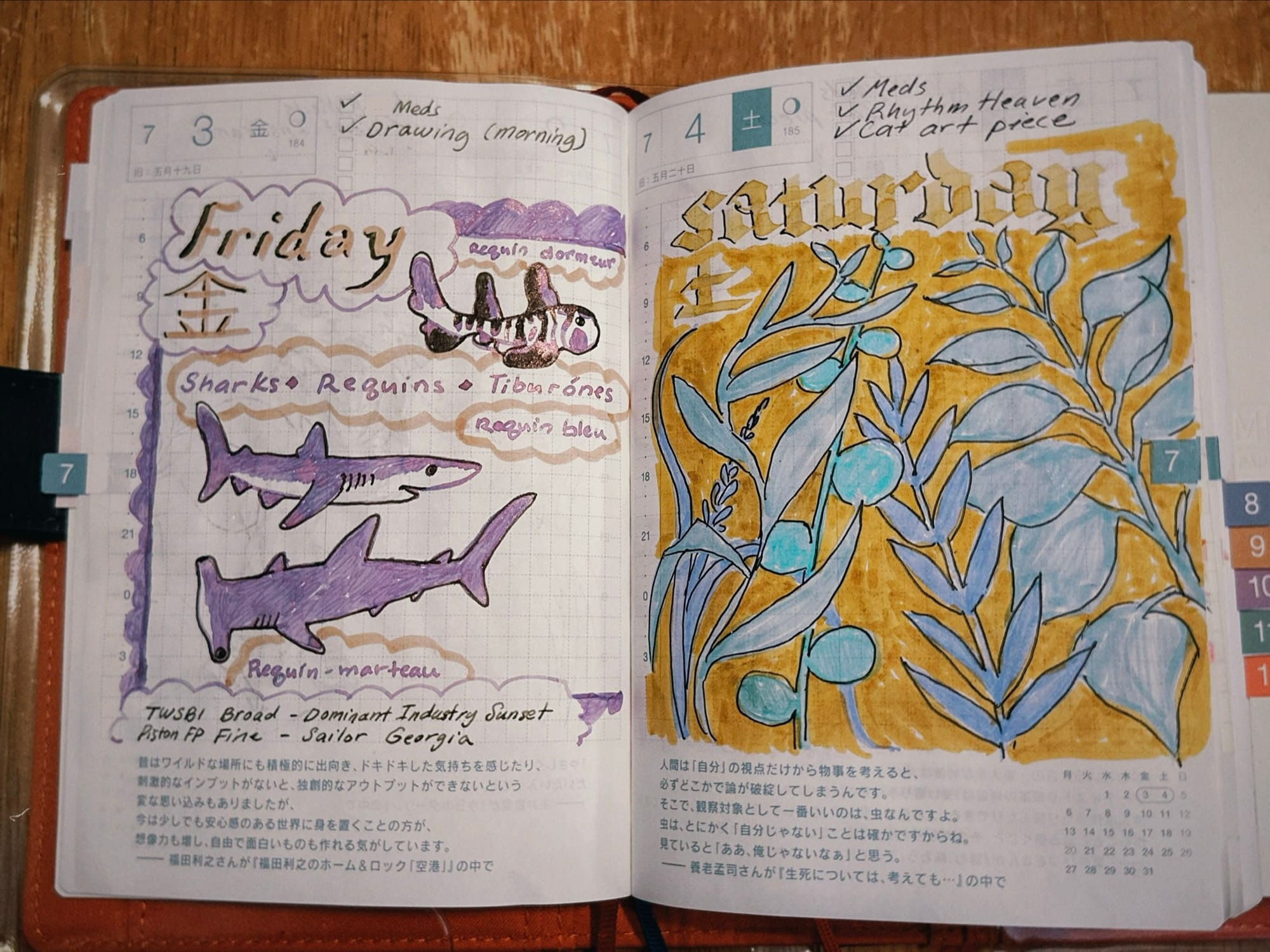
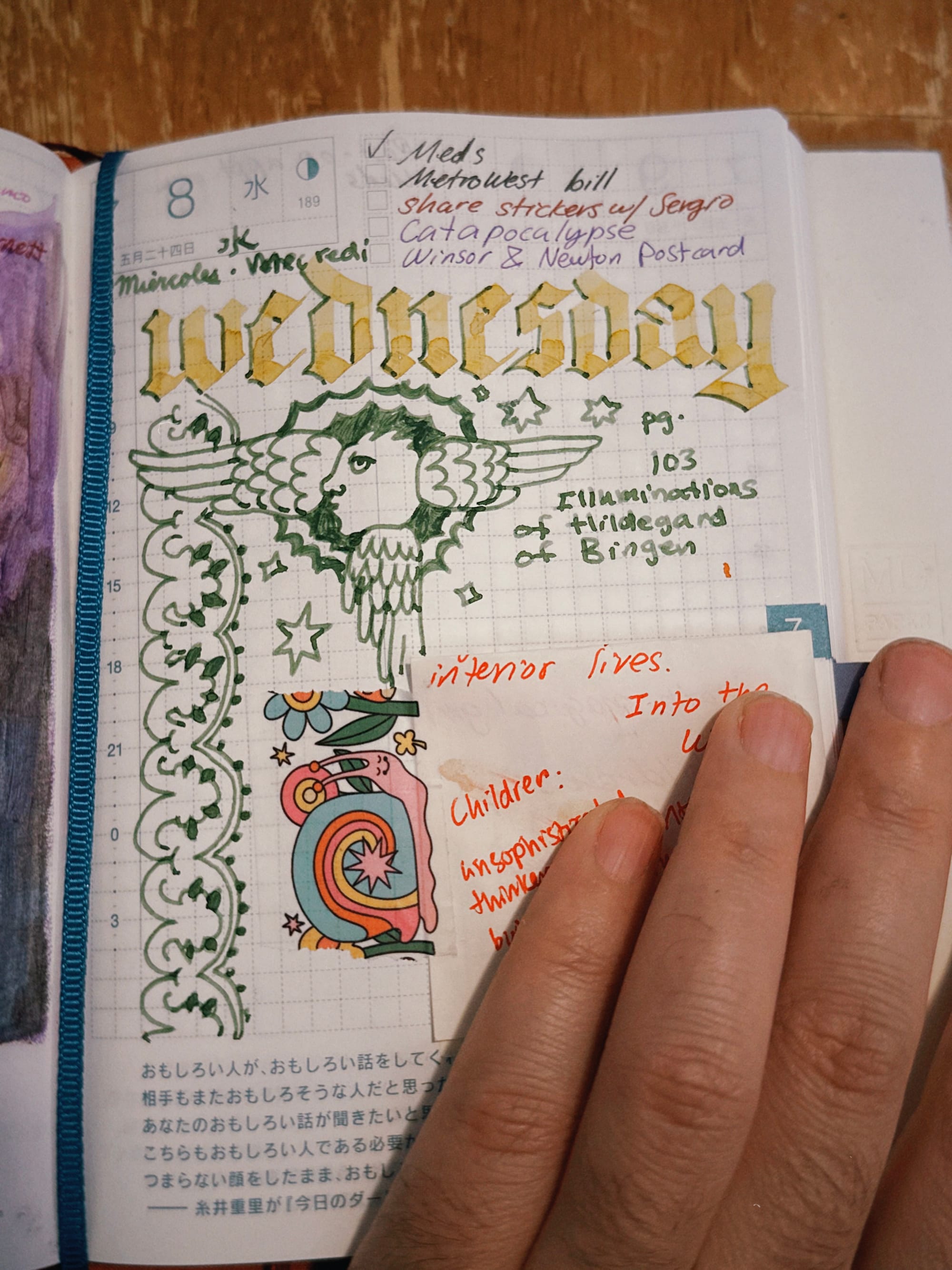
Hobonichi Headings
I half wondered if I’d eventually give up on this newfound hobby. It happens usually when my daily routine is upended. Kids are home for vacation, the family has a bout of sickness, or something new and exciting is going on. I’ve dropped several creative projects (including other attempts at calligraphy) to pick up something else that needs my attention–you really can only do so much. What I didn’t foresee is how giving calligraphy another chance and sticking with it would affect my writing and drawing overall. It’s not a huge transformation of any kind. It’s simply made me more aware of each individual stroke made on the page and at the same time loosened up the tension I hold inside worrying about mistakes. I feel the mistake as I make it with each stroke. All I can do is commit to the next one. Even if I misremembered the letter or my verticals come out a little slanted, the finished product is immensely more forgiving than my reaction to my errors. The collective look of all the strokes can be quite wonky before it enters the realm of garish. And that realization is so hard to arrive to with open-ended drawing sessions. It’s like a huge weight was lifted from my art-making process because it speaks directly to that drastic, knee-jerk reaction to making something “bad.” I didn’t know this was something I needed. And if I did, I also wouldn’t have devised this as plan to address the issue.